


Why Combining Swimming and Dance Supports Confidence, Coordination, and Body Awareness in Kids
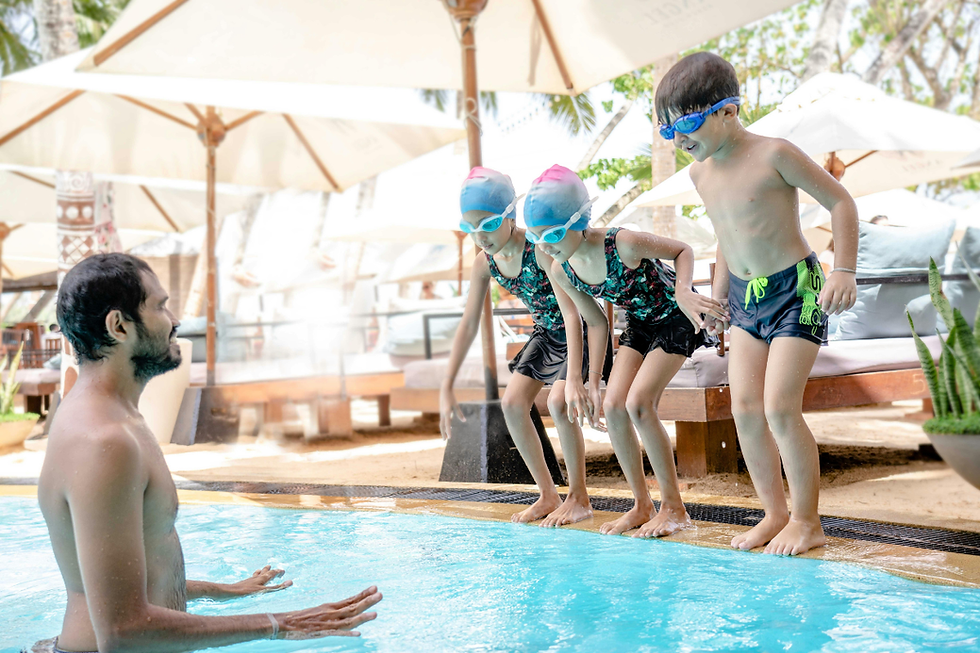
Dance and swimming might seem like completely different activities. One happens in a studio with music, the other in water. But when it comes to how children develop confidence, coordination, and body awareness, these two activities work together beautifully.
If your child already loves dance, you might be wondering whether adding swimming to their routine makes sense, or if it's just one more thing on an already busy schedule. Here's why many families find the combination worthwhile.
Movement builds confidence in different ways
Confidence grows when children face challenges and discover they can handle them. That moment of realisation, 'I can do this,' is what builds genuine self-belief.
In dance, children learn to control their bodies through rhythm and expression. They follow sequences, move to music, and gradually master steps that once felt impossible. There's something powerful about that progress, especially when it happens in a supportive studio environment where every child's journey is valued.
Swimming offers a different kind of challenge. Water is unfamiliar. It moves, it resists, it requires trust. Learning to float, breathe, and move through water asks children to rely on their bodies in a completely new way. When they manage it, the confidence boost carries over into other areas of life.
Research from Swim England found that 84 per cent of parents noticed improved mood in their children after swimming lessons, and 80 per cent felt lessons reduced their child's stress or anxiety. Dance research tells a similar story, with programs showing improvements in self-esteem and reduced feelings of loneliness in children.
When children experience success in both environments, they develop a broader sense of what they're capable of.
Coordination develops differently on land and in water
Dance builds balance, timing, and posture. Children learn to coordinate their arms and legs, move in time with music, and control how their bodies move through space. Studies show dance programs lead to measurable improvements in balance among preschoolers, which makes sense when you watch little ones progress from their first tentative steps to confident pirouettes.
Swimming develops coordination in ways that land activities simply can't replicate. In water, children must coordinate opposite arms and legs in patterns that cross the body's midline. These bilateral movements, like alternating arm strokes with reciprocal kicks, help build connections between the two sides of the brain.
A four-year Australian study from Griffith University found that children who swam from an early age were significantly ahead of their peers in cognitive and motor skills. The researchers found advantages not just in physical development, but in language, maths reasoning, and social skills too.
Skills learned in water often show up on land. And skills built in the studio often make swimming feel more natural. The two environments complement each other in ways that support overall development.
Body awareness starts with knowing where you are
Body awareness is the foundation of good movement. It's how children know where their limbs are, how much force to use, and how to move with control and intention.
Dance teaches this through constant feedback. Children watch themselves in mirrors, feel the music, and learn to sense the difference between a sloppy movement and a clean one. Over time, they develop an internal map of how their body moves, which shows up in everything from better posture to fewer bumps and trips in everyday life.
Swimming builds body awareness through a different mechanism. Water reduces the normal feedback children get from gravity. To stay oriented and move efficiently, they have to pay closer attention to internal signals. The pressure of water, about 30 times greater than air, also gives their nervous system rich sensory input that land activities don't provide.
Together, dance and swimming give children body awareness training from two completely different angles. That combination creates stronger foundations than either activity alone.
Different activities suit different learning styles
Not every child expresses themselves the same way. Some love music and performance. Others feel more comfortable in quieter, repetitive practice. Some thrive with an audience, others prefer focusing on their own progress.
Dance offers creative expression, group connection, and the joy of moving to music. Swimming offers a calmer environment where children can work on skills without comparison or performance pressure.
When children have access to both, they get to build confidence in different ways. They learn that being capable doesn't look just one way, and that trying new things in different environments is part of growing.
Why variety matters more than specialisation
Parents sometimes worry about spreading children too thin. But research consistently shows that children who participate in multiple activities are less likely to get injured and more likely to stick with physical activity long-term.
One study found single-sport young athletes were nearly twice as likely to suffer injuries compared to children who played multiple sports. Variety prevents overuse and keeps movement fun and engaging rather than repetitive.
Swimming and dance are particularly well-matched. Dance builds the flexibility, posture, and rhythmic control that help in water. Swimming builds the core strength, endurance, and limb coordination that support sustained dance training. Neither replaces the other, they simply strengthen what the other is already building.
A balanced approach to movement
You don't have to choose just one activity for your child. Dance and swimming complement each other in ways that support strength, flexibility, endurance, emotional well-being, and confidence.
Both activities can focus on progress over competition when taught in the right environment. Both can be joyful, supportive, and focused on helping each child develop at their own pace. And both give children skills and confidence that last well beyond childhood.
Water safety is another consideration worth mentioning. Drowning remains a leading cause of accidental death for young Australian children, which makes swimming lessons about more than just physical development. They're also about building the water confidence and safety skills that every child needs.
The goal isn't to fill every afternoon with structured activities. It's to give children varied movement experiences that help them feel capable, confident, and comfortable in their own bodies. When dance and swimming work together, that's exactly what happens.